Circularity transitions: from industry standards to informal systems
Learn what circular economy looks like in practice, in different global contexts!
We will delve into India’s circular economy, powered by millions of informal waste workers. They form the backbone of urban recycling systems by recovering large portions of plastics, paper, and other materials, yet they remain invisible in policy and markets. This is also observed in many other developing economies. What needs to change? How can we focus on re-designing transition pathways where circular economy ambitions meet social equity to enable a just transition to bring back the focus on people. This session will explore few case studies of how social enterprises are enabling this.
We will then move on to examining how circularity is implemented in the Dutch construction sector, showcasing how whole-life carbon assessments can bridge policy and practice to guide policymakers and industry stakeholders toward decarbonization pathways.
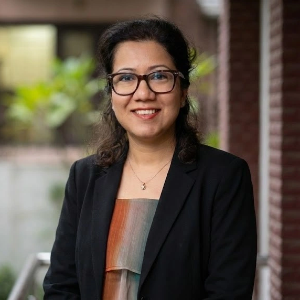
Rozita Singh
is a sustainability practitioner with over 13 years of experience advancing climate, circular economy, and sustainable development initiatives. She holds a Master’s degree in Sustainable Development Practice from TERI and MSc in Urban Management and Development from Erasmus University Rotterdam. She has worked with international institutions including the UNDP. Her work focuses on innovation, systems change, and translating global frameworks such as the Sustainable Development Goals into practical solutions. Prior to joining UNDP, she worked as Project Manager, Circular Economy at Royal Philips Netherlands in their Global Sustainability office. Rozita also mentors young changemakers and regularly engages with youth and emerging leaders working on sustainability challenges.

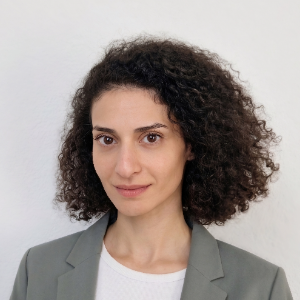
Hala Abi Saad
is a built-environment specialist who is passionate about creating cohesive urban habitats where all living beings can thrive. She adopts a multidisciplinary approach to make circularity and decarbonization actionable, developing methodologies that integrate carbon impact into early design phases at both urban and architectural scales. At Carbonlab (Group A), she specialized in construction LCA, focusing on bringing late-design-phase knowledge into early development processes to maximize carbon reduction potential. This included leading research on low-carbon train stations and co-creating participatory tools. As a Decarbonization Analyst at WiseBrick, she now advances innovative tooling to empower stakeholders in embedding regenerative practices in the built environment.

Carla Robb
Community Builder, IHS Alumni Board | Moderator

Sagar Jayaramulu
Vice-president, IHS Alumni Board | Moderator